
What is CBAM?
The Carbon Border Adjustment Mechanism (CBAM) of the European Union (EU) is an instrument for putting a price on the carbon emitted during the production of products entering the EU and encouraging cleaner industrial output in non-EU countries.
The Carbon Border Adjustment Mechanism (CBAM) is an environmental policy mechanism meant to assist the EU’s climate aspirations of attaining a net reduction of greenhouse gas (GHG) emissions of at least 55% by 2030 and climate neutrality by 2050.
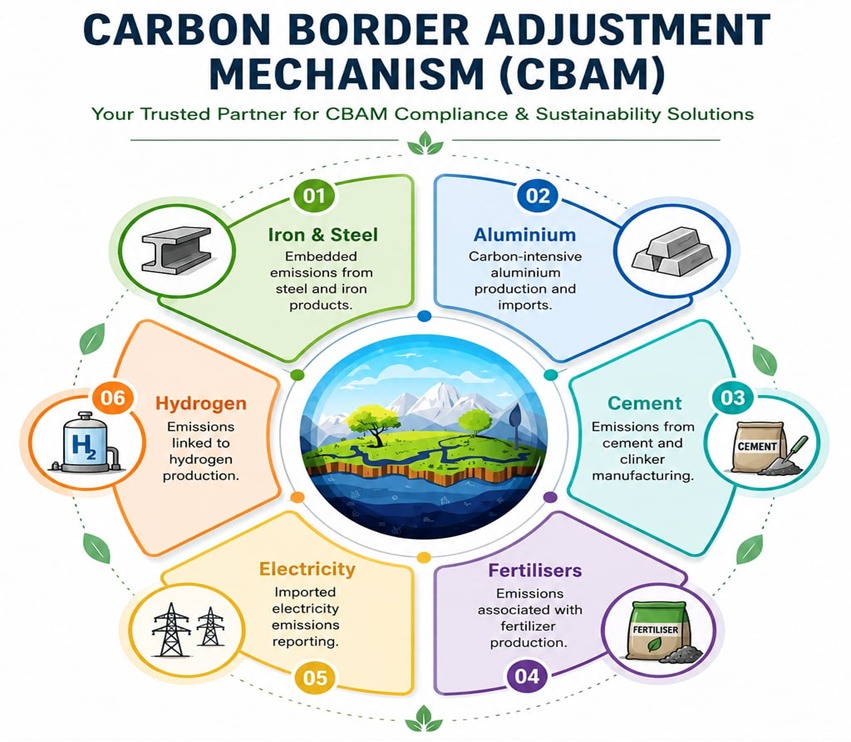
The CBAM does not target countries but the embedded carbon emissions of products imported into the EU for specific sectors that are within the scope of the EU ETS and the most at risk of carbon leakage. They include namely: Cement, Iron and Steel, Aluminium, Fertilizers, Hydrogen And Electricity. It also includes some precursors and some downstream products of the aforementioned sectors.
What are embedded emissions?
Embedded emissions include both direct and indirect emissions from the manufacturing process, as well as emissions embedded in precursor materials, resembling the goods’ carbon footprint. It is important to note that the scope of CBAM is primarily aligned with the EU ETS rules, leading to other methods in calculating product carbon footprints such as the “GHG Protocol” or ISO 14067.
Are you exporting your goods to customers in EU Countries?
Also, if you sell your products to traders who then sell them to EU customers, your goods fall under the CBAM. In all those cases where CBAM goods end up being imported into the EU, at some point the importer will contact you to gather information on the “embedded emissions” of these CBAM goods.
Furthermore, if you sell your goods to merchants who subsequently sell them to EU clients, your items are subject to the CBAM. In all circumstances where CBAM items are imported into the EU, the importer will contact you at some time to acquire information on the “embedded emissions” of these CBAM goods.
How ASHVATTHA can help you to comply with CBAM?
ASHVATTHA has been extensively working in the field of Carbon Footprint Reduction for various customers across the countries. With in-house expertise, ASHVATTHA can smoothly guide you to report on CBAM requirements at ease and assist you in reducing the carbon footprint associated with your product.
- Product Carbon Footprint Assessment
- Global Carbon Council (GCC)
- Offsetting the Product Carbon Footprint
- Assistance in Implementation of Strategies to Reduce Product Carbon Footprint
We are helping to offset your carbon footprint.
Ashvattha’s Carbon Credit services help to make it easy for both individuals and companies to combat climate change and achieve both their specific sustainability goals.
We assist both domestic and international clients by connecting them with high-quality emission-reduction projects, providing climate education, and developing innovative solutions that ensure effective climate action.
You may reduce your own carbon footprint and offset your unavoidable emissions to aid in the transition to a low-carbon, sustainable future by being aware of your decisions and how they affect the environment.
Our CBAM Compliance Services
CBAM (Carbon Border Adjustment Mechanism) Compliance Services help businesses meet the European Union’s carbon reporting and compliance requirements for imported goods. CBAM aims to prevent carbon leakage by ensuring that imported products bear a carbon cost equivalent to products manufactured within the EU.
Our CBAM services assist manufacturers, exporters, importers, and supply chain organizations in understanding, calculating, reporting, and managing embedded carbon emissions associated with their products. We provide end-to-end support to help businesses maintain access to EU markets while improving sustainability performance and regulatory compliance.
CBAM Readiness Assessment
Evaluate your organization's preparedness for CBAM requirements by identifying compliance obligations, data gaps, reporting requirements, and potential risks.
Carbon Footprint Assessment
Calculate direct and indirect greenhouse gas emissions associated with products and manufacturing processes as required under CBAM regulations.
Embedded Emissions Calculation
Determine product-level embedded carbon emissions using internationally accepted methodologies and EU guidelines.
CBAM Data Collection & Management
Develop systems for collecting, validating, organizing, and maintaining emissions-related data from suppliers, production facilities, and supply chains.
CBAM Reporting Support
Prepare and submit CBAM reports in accordance with EU requirements, ensuring accurate and timely compliance.
Supply Chain Carbon Assessment
Assess supplier emissions data and identify opportunities to improve transparency, reduce carbon intensity, and strengthen compliance.
CBAM Documentation & Compliance Management
Support documentation preparation, record maintenance, emissions verification, and compliance monitoring activities.
Decarbonization Strategy
Develop practical roadmaps to reduce product carbon footprints, improve operational efficiency, and minimize future CBAM liabilities.
ESG & Sustainability Advisory
Integrate CBAM requirements with broader Environmental, Social, and Governance (ESG) initiatives to enhance sustainability performance and stakeholder confidence.
Carbon Cost Impact Assessment
Evaluate the financial implications of CBAM on exports and supply chains and identify strategies to improve competitiveness in international markets.
Why Ashvattha ?
Ashvattha combines technical expertise, regulatory knowledge, and sustainability best practices to deliver practical and results-driven ESG solutions. Our multidisciplinary team supports organizations in transforming ESG commitments into measurable business outcomes, enabling responsible growth, enhanced stakeholder trust, improved resilience, and long-term value creation.
Partner with Ashvattha to strengthen your ESG performance, accelerate sustainability initiatives, and build a more resilient and responsible future.
Industries Covered Under CBAM
- Iron & Steel
- Aluminium
- Cement
- Fertilisers
- Electricity
- Hydrogen
Benefits of Our CBAM Services
- Compliance with EU CBAM Regulations
- Improved Access to European Markets
- Reduced Regulatory Risks
- Enhanced Sustainability Performance
- Better Carbon Data Management
- Increased Supply Chain Transparency
- Stronger ESG Credentials
- Competitive Advantage in Global Trade
Ashvattha provides comprehensive CBAM compliance and sustainability solutions to help businesses navigate evolving international carbon regulations and achieve long-term environmental and business goals.